
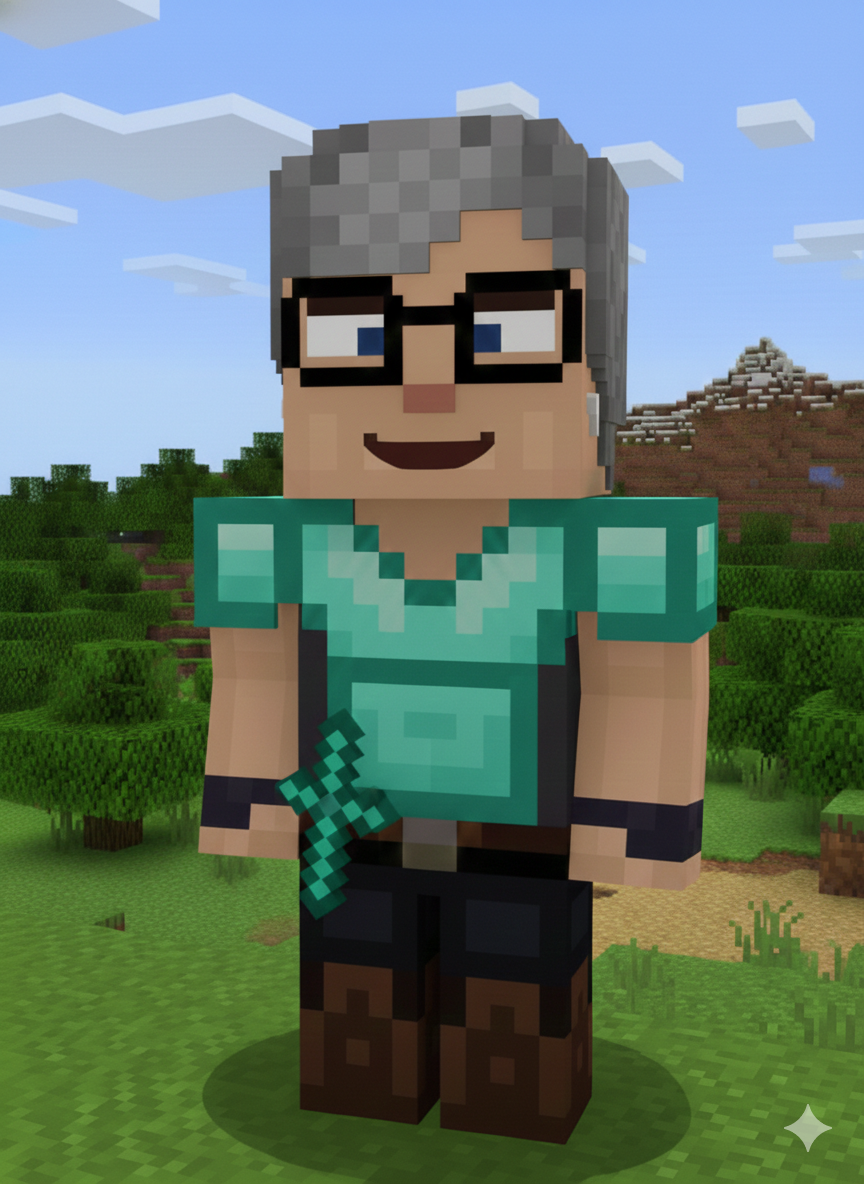
Hello! My name is Natalie Pendergraft, and I am the founder of Farlands Voyages! Welcome!!
The Digital Hearth: Why I’m Meeting the Next Generation in the Farlands
For years, I’ve watched the world change through the eyes of my children and now my grandchildren. Like many parents, I initially saw gaming as a hobby—a screen, a controller, a distraction. But then I did something that changed our family dynamic forever: I picked up a controller and joined them.
What I discovered in those digital worlds wasn't just a game; it was a non-threatening "Third Space" where the usual barriers between adult and child dissolved. In the middle of a Minecraft build or a digital quest, the "How was school?" questions that usually get one-word answers turned into deep, organic conversations. I wasn't just a parent or grandparent anymore; I was a teammate.
Meeting Them Where They Are
We often ask this generation to step out of their world and into ours to communicate. But there is a profound power in meeting a child where they are. When we join them in the digital spaces they love, we are telling them that their passions have value.
For the "Minecraft Generation," communication isn't just spoken; it’s collaborative. They learn leadership by organizing a "raid," empathy by sharing resources, and conflict resolution by deciding where to build the next village. This is their language, and if we want to teach them how to navigate the world, we have to speak it with them.
The Science Behind the Connection
What I felt in my heart while playing with my grandsons is now being backed by researchers. The American Psychological Association has noted that cooperative gaming can actually strengthen "prosocial" behavior—teaching kids how to be helpful, informative, and collaborative in ways that translate directly to the real world.
Researchers call these games "Social Hubs." They are the new neighborhood parks. In these spaces, kids are practicing the very skills we want them to have as adults:
Strategic Communication: Planning a complex project with a team.
Emotional Resilience: Managing the "grief" of a lost build and starting over.
Collaborative Problem Solving: Working through disagreements to reach a shared goal.
The Mission of Farlands Voyages
I started Farlands Voyages because I believe that the communication gap between generations can be bridged with a pickaxe and a bit of imagination. I’ve seen firsthand how a child who is shy or "shut down" in person can become a confident leader on a server.
We aren't just playing a game here. We are "anchoring" at a Home Port every week to practice being better teammates, clearer communicators, and more confident versions of ourselves. I’ve spent a lifetime gaming with my sons and grandsons, and now, I’m honored to invite your students to join the crew.
Let’s set sail.
Our Approach
Navigators are a Teammate. We don’t sit on the sidelines or moderate from a distance. We are right there in the trenches with your student, pickaxe in hand. By playing alongside them, we get to know each child as a person—their humor, their strengths, and their unique way of seeing the world. This isn't just a 50-minute session; it’s about building a lasting relationship where your child feels seen, heard, and valued as an individual."
🧭 The Navigator’s Oath
As a Navigator of Farlands Voyages, I pledge to be the steady hand at the helm. I commit to:
Providing a Safe Harbor:
To prioritize the emotional and digital safety of every child, ensuring our server is a sanctuary from judgment and "griefing."
Guiding with Pedagogy:
To use my training as an educator to turn every digital challenge into a lesson in resilience, empathy, and self-regulation.
Empowering the Crew:
To listen more than I speak, allowing students to lead, problem-solve, and find their own "Internal Compass."
Maintaining Professional Excellence:
To uphold the highest standards of subclinical support, recognizing the unique needs of every Voyager under my care.
"We don't just build in Minecraft; we build the builders."
⚓ The Voyager’s Code of Conduct
1. Honor the Build
We respect the hard work of our crewmates. We do not "grief," destroy, or alter another Voyager’s creation without permission. We build each other up, literally and figuratively.
2. No Voyager Left Behind
We are a team. We share resources, offer help to those struggling with a task, and ensure everyone—regardless of their skill level—has a role to play in our expedition.
3. Safe Passage for All
Our words are as important as our weapons. We use kind, inclusive language. Bullying, harassment, or "trash talk" has no place in the Farlands. Every Voyager deserves a safe voyage.
4. Follow the Navigator
When the Navigator calls for "All Hands on Deck," we pause and listen. We respect the boundaries of the mission and the structure of our crew.
5. Own Your Compass
Mistakes happen—both in Minecraft and in life. When we mess up, we own it, fix the "damage" where we can, and learn how to sail better the next time.